If you have ever wondered whether the timing and order of your supplements matters, the answer is yes. It is not complicated, but understanding a few core principles will meaningfully change how much benefit you get from what you are already taking. This guide explains exactly how to get the most from your morning supplement routine without adding unnecessary complexity to your day.
Why Timing Matters When Taking Supplements
Think of your supplements the way you would think about watering a plant. You can use the best fertilizer available, but if you pour it on concrete instead of soil, nothing takes hold. The “soil” for your supplements is your digestive system. What you eat, and when, determines how much of each supplement reaches your bloodstream and produces a measurable effect.
This is not a fine-print concern. Timing can be the difference between a supplement working at a fraction of its potential and working as intended. In a small study of 17 patients published in the Journal of Bone and Mineral Research, patients who simply moved their vitamin D dose to the largest meal of the day raised their blood levels by roughly 50% in three months. Same dose, same product, different timing. [11]
Fat-Soluble Vitamins: A Plain-English Summary
What “Fat-Soluble” Actually Means
Vitamins split into two camps based on what they dissolve in. Four of them (A, D, E, and K) dissolve in fat rather than water. That single property drives everything else about how they behave in your body.
Because they dissolve in fat, they are absorbed by your small intestine alongside the fat in your food. Fat is not just a bonus here. It is a vehicle. No fat, no ride.
The other consequence: your body stores them, primarily in the liver, rather than flushing the excess. Whatever is not needed right away is held for later, with the surplus eliminated mainly through bile into the stool. That is a feature, since it buffers you against day-to-day gaps, but it is also why these are the vitamins where taking more is not automatically better.
What They Need To Work
A 2024 review of fat-soluble vitamins in the Journal of Clinical Medicine found that three systems have to be functioning for a fat-soluble vitamin to actually reach your bloodstream:
- The intestinal lining: This is what takes the vitamin in. Most of this happens in the upper small intestine, early in digestion. (Vitamin K2 is the exception. It is absorbed mainly in the colon.)
- The liver and gallbladder: These supply bile, which is what makes fat absorbable in the first place.
- The pancreas: This supplies the enzymes that break fat down so it can be absorbed at all.
And absorption is not the finish line. Vitamin A binds to a dedicated transport protein for the trip to the liver. Vitamins E and K ride the body’s fat-transport particles through the bloodstream. Vitamin D is not even usable when absorbed. It has to be converted in the liver and then the kidneys before it becomes active. [10]
So a fat-soluble vitamin needs: dietary fat to get in, a working gut-liver-pancreas system to process it, and transport and activation machinery on the other side.
How To Get The Best Absorption
- Take them with a meal containing fat: This is the one move that matters most, and it follows directly from biology. It is also the one that has been measured directly in patients. [10, 11]
- Know what interferes: Certain medications reduce absorption or raise requirements, including fat blockers, cholesterol binders, corticosteroids, some antiepileptics, and mineral-oil laxatives. Broad-spectrum antibiotics disrupt the gut bacteria that produce vitamin K. [10]
- Recognize when your baseline is different: Conditions affecting the gut, liver, or pancreas, along with surgeries like bowel resection, gastrectomy, or any form of bariatric surgery, reduce absorption through less surface area, fewer enzymes, disrupted bile, or altered gut flora. So do restrictive eating patterns that cut out whole food groups. [10]
Eat The Foods, Too
Supplements work alongside diet, not instead of it:
- A: liver, egg yolks, butter, fish oil, carrots, sweet potatoes, spinach
- D: fatty fish (salmon, mackerel, sardines), cod liver oil, egg yolks, liver, mushrooms
- E: nuts and seeds, vegetable oils, avocado, wheat germ, green vegetables
- K: leafy greens and cruciferous vegetables (K1); animal products and fermented foods (K2)
Don’t stack blindly
Because these vitamins accumulate rather than wash out, it is worth accounting for hidden sources. Fortified foods and overlapping supplement products can quietly add up. [10]
The through-line: with fat-soluble vitamins, how you take them is nearly as important as whether you take them. A well-made supplement swallowed on an empty stomach is a wasted dose.
Which Supplements Should Always Be Taken with Food
Beyond fat-soluble vitamins, several other supplements perform noticeably better alongside food:
- Magnesium and zinc: Taking either on an empty stomach can cause nausea. Food buffers the effect and improves tolerance.
- Fish oil / omega-3s: These absorb better with a fat-containing meal, and food helps prevent the gastric discomfort some people experience.
- Turmeric and curcumin: Standard turmeric has very poor bioavailability. A widely cited review in Molecular Pharmaceutics documented how little of an oral curcumin dose survives digestion and reaches circulation, with most of the dose passing through the body without being absorbed. [13] CurQLife®, The Collection’s patented curcumin formulation, releases 80% of its active ingredient within 30 minutes (95% in an hour) when taken with food. Without food, most of the benefit is lost. [5, 6, 7]
- Probiotics: Most strains tolerate food well, and taking probiotics with a meal is the more reliable approach regardless of specific strain.
Building Your Ideal Breakfast Supplement Routine
Consistency matters more than optimization. A supplement taken reliably every morning with a simple meal will outperform a theoretically ideal supplement taken inconsistently. The goal is a routine simple enough to repeat without effort.
Step-by-Step: What to Take, in What Order, and with What
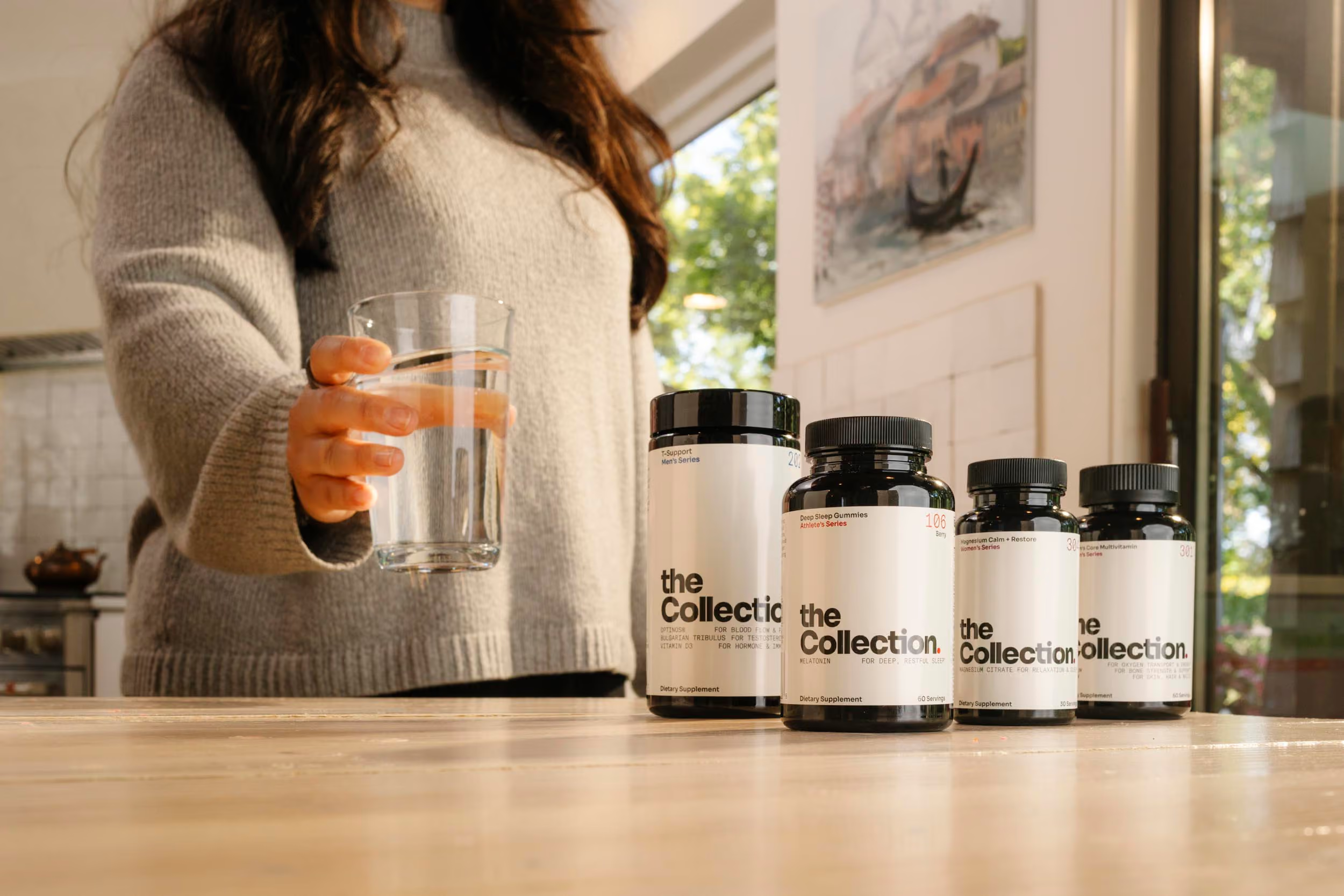
Step 1: Begin with 8 to 16 oz of water. Your body has gone 7 to 8 hours without fluids overnight. If you use an electrolyte supplement, this is the right moment for it.
Step 2: Eat something, then take your supplements partway through the meal so food is already present when they reach your digestive system.
Step 3: Fat-soluble vitamins (A, D, E, K) and any turmeric or curcumin products should be taken at this point, with the fat from your meal in play to support absorption. [10, 11]
Step 4: Water-soluble vitamins, B complex, and probiotics can be taken at the same time with no special requirements.
Step 5: Magnesium and zinc also go with food. If you are taking a split-dose supplement (morning and evening), this is your morning dose.
Why Absorption Is the Missing Piece Most Brands Do Not Explain
Most supplement brands disclose what is in their products. Almost none explain how to take their supplements for maximum benefit. The Collection is built differently: every product comes with specific timing and absorption guidance, every ingredient is named on the label, and every patented ingredient is listed at the exact dose used in its clinical research. [7, 8, 9]
Common Mistakes When Taking Supplements in the Morning
- Taking everything with coffee only: Coffee reduces the absorption of certain minerals, particularly iron. In a classic study in the American Journal of Clinical Nutrition, a cup of coffee taken with a meal cut iron absorption from that meal by around 40%. [15] Waiting 30 minutes between your coffee and your supplements is a straightforward way to avoid this.
- Taking calcium and iron at the same time: These two minerals compete for absorption pathways, an interaction documented across multiple human absorption studies. [16] Separate them by at least two hours.
- Not using enough water: Supplements should be taken with a full glass of water, not a sip.
- Skipping days and doubling up: A higher dose does not compensate for a missed day. If you miss a dose, resume the following day as normal.
- Taking fat-soluble vitamins without food: For vitamins D, A, E, and K, this significantly reduces the benefit. [10, 11]
How to Make It a Consistent Habit for the Whole Family
Store supplements where breakfast happens, not where storage seems logical. If the vitamins are out of sight, they will be forgotten. Connecting supplement-taking to something that already happens every morning, whether that is eating breakfast or making coffee, removes the need for willpower or reminders.
For children, chewable formats eliminate most barriers. A child who treats a morning chewable as a normal part of breakfast will take it without prompting.
How The Collection Is Built Around Your Actual Morning
The Collection was designed for real families with school pickups, early practices, long commutes, and mornings that do not always go as planned. Every product includes timing and absorption guidance, and every ingredient is printed on the label so you always know exactly what you are giving your family. [7, 8]
Sample Morning Routines by Series
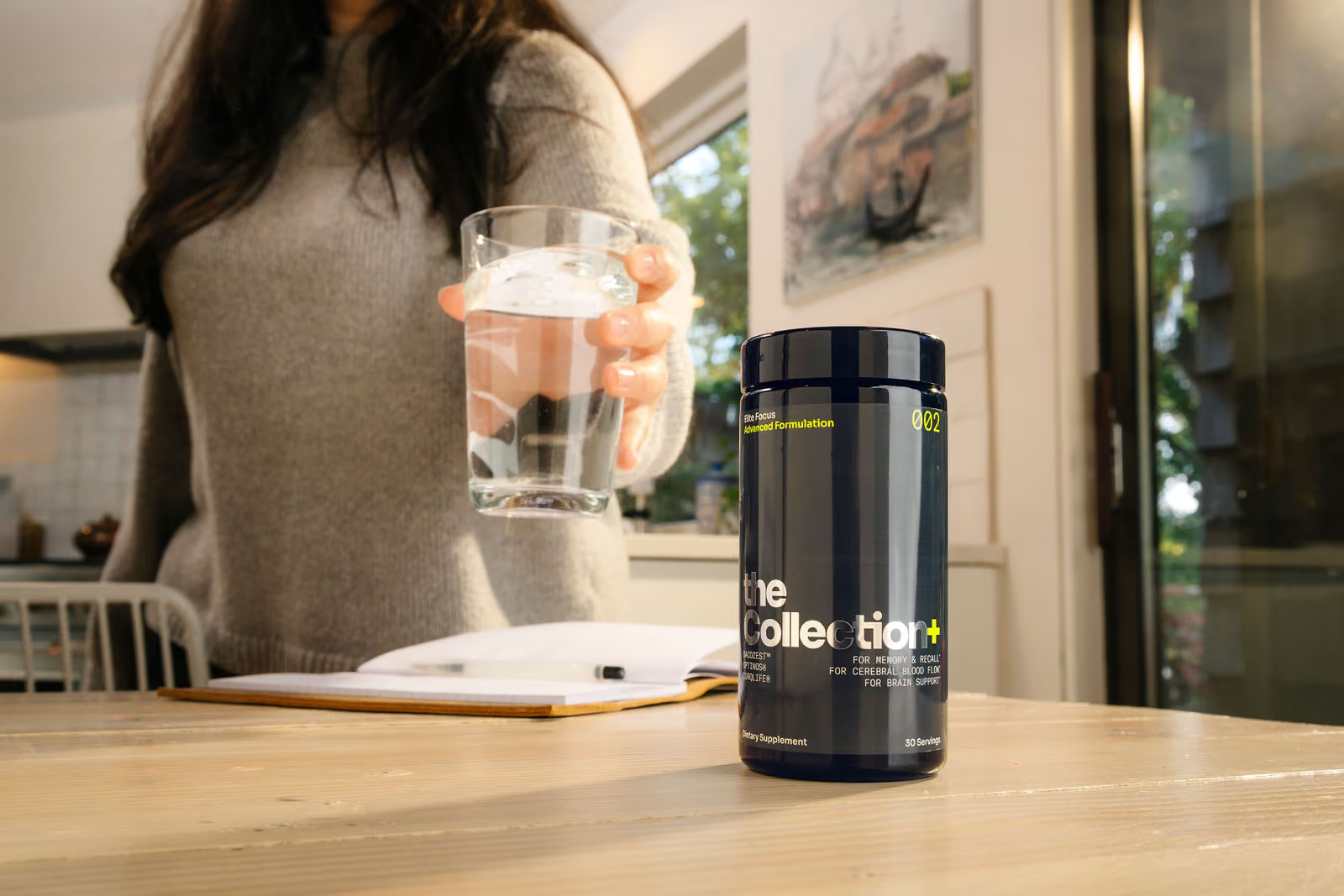
The Collection+ and Athlete’s Series: Pure Hydration with 12 ounces of water. Breakfast with eggs or nut butter on toast. Pure Creatine and Clean Focus Advanced with breakfast. Muscle Builder Complex and Full Tilt Preworkout 20 to 30 minutes before training.
For a child in the house: Focus Fuel with breakfast. Chewable, caffeine-free, no water needed
The Collection+ and Men’s Series: 12 oz water. Men’s Core Multivitamin with breakfast. CurQLife® Joint Support morning dose with food. Endurance Pre-Workout, Full Tilt Pre-Workout, or Non-Stim Pre-Workout 20 minutes before training on active days.
The Collection+ and Women’s Series: 12 oz water. Women’s Core Multivitamin with breakfast. CurQLife® Joint Support morning dose with food. Pure Collagen + Probiotics stirred into coffee or a smoothie.
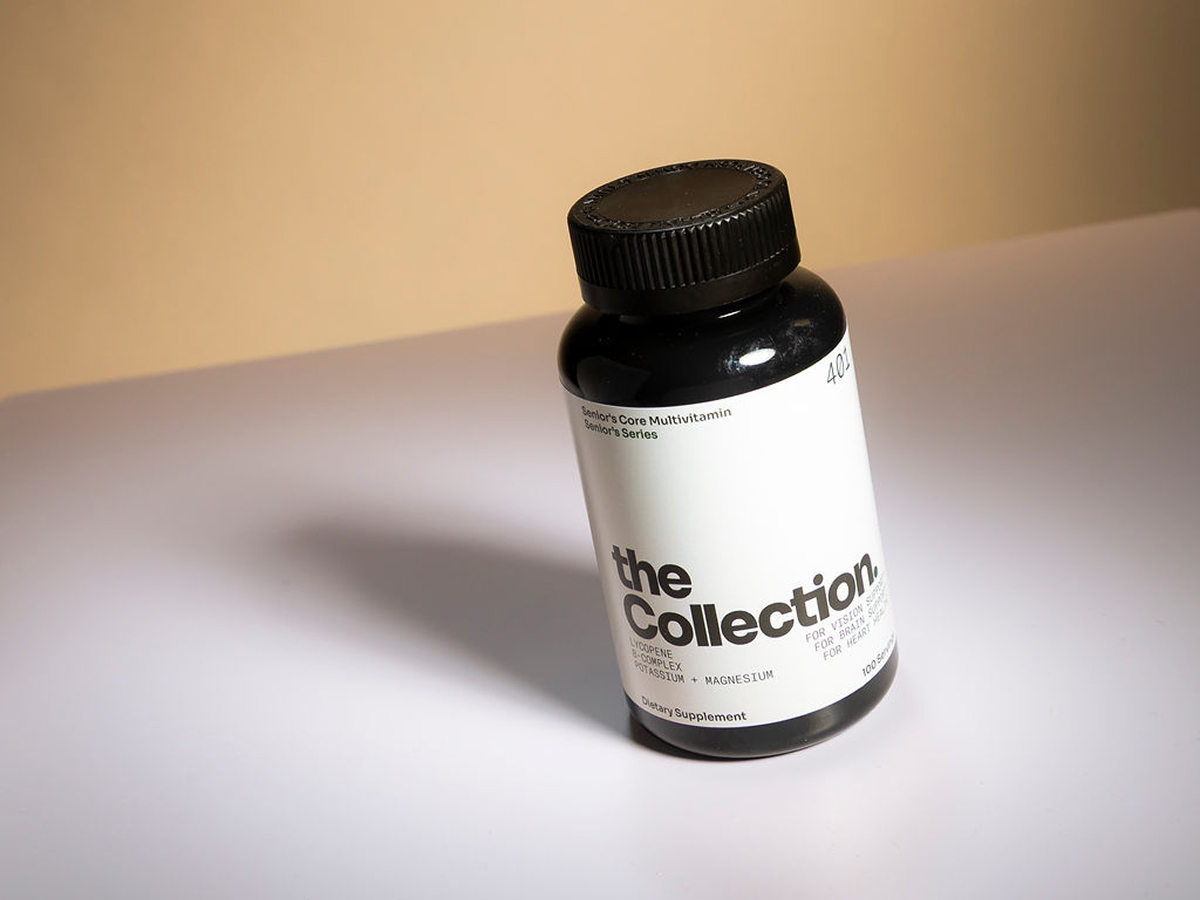
The Collection+ and Senior’s Series: Water first. Senior’s Core Multivitamin with a breakfast that includes a fat source. CurQLife® Joint Support and NAD Cellular Repair at the same meal, at the same time, every day.
Disclaimer: These statements have not been evaluated by the Food and Drug Administration. This product is not intended to diagnose, treat, cure or prevent any disease.
Sources
- [3] Laila Nutraceuticals: OptiNOs® Strength & Body Composition Study (6-week RCT)
- [5] Laila Nutraceuticals: CurQLife® In Vitro Cell Studies
- [6] Laila Nutraceuticals: CurQLife® In Vivo Arthritis Study
- [7] The Collection Science Education Platform, thecollectionbrand.com
- [8] The Collection Supplement Deep Dive, thecollectionbrand.com
- [9] The Collection Product Label Information, Earth’s Creation USA
- [10] Andrès E, Lorenzo-Villalba N, Terrade J-E, Méndez-Bailon M. Fat-Soluble Vitamins A, D, E, and K: Review of the Literature and Points of Interest for the Clinician. Journal of Clinical Medicine, 2024;13(13):3641
- [11] Mulligan GB, Licata A. Taking vitamin D with the largest meal improves absorption. Journal of Bone and Mineral Research, 2010
- [13] Anand P, Kunnumakkara AB, Newman RA, Aggarwal BB. Bioavailability of curcumin: problems and promises. Molecular Pharmaceutics, 2007
- [15] Morck TA, Lynch SR, Cook JD. Inhibition of food iron absorption by coffee. American Journal of Clinical Nutrition, 1983
- [16] Hallberg L, Rossander-Hulthén L, Brune M, Gleerup A. Calcium and iron absorption: mechanism of action and nutritional importance. European Journal of Clinical Nutrition, 1992