For anyone researching supplements for a parent, a grandparent, or for themselves at 65 and older, the foundational point to understand is that the supplement needs of older adults are not slightly different from those of younger adults. They differ considerably in what the body requires, how efficiently it absorbs nutrients from food and supplements, and what interactions to monitor given the medications that become more common at this stage of life.
How Your Body’s Ability to Absorb Nutrients Changes After 65
Aging changes not only what the body needs but how effectively the digestive system extracts nutrients from food and supplements. This is a gradual shift with real consequences when it is not accounted for in a supplement routine.
Why B12 Becomes Harder to Absorb and What to Do About It
Vitamin B12 in food is bound to protein, and freeing it requires stomach acid. With age, a person’s ability to break down B12 from food becomes weaker because stomach acid production begins to drop. However, research finds absorption of supplemental B12 holds steady with age even as food-bound absorption falls, which is why supplementation is effective here. [45]
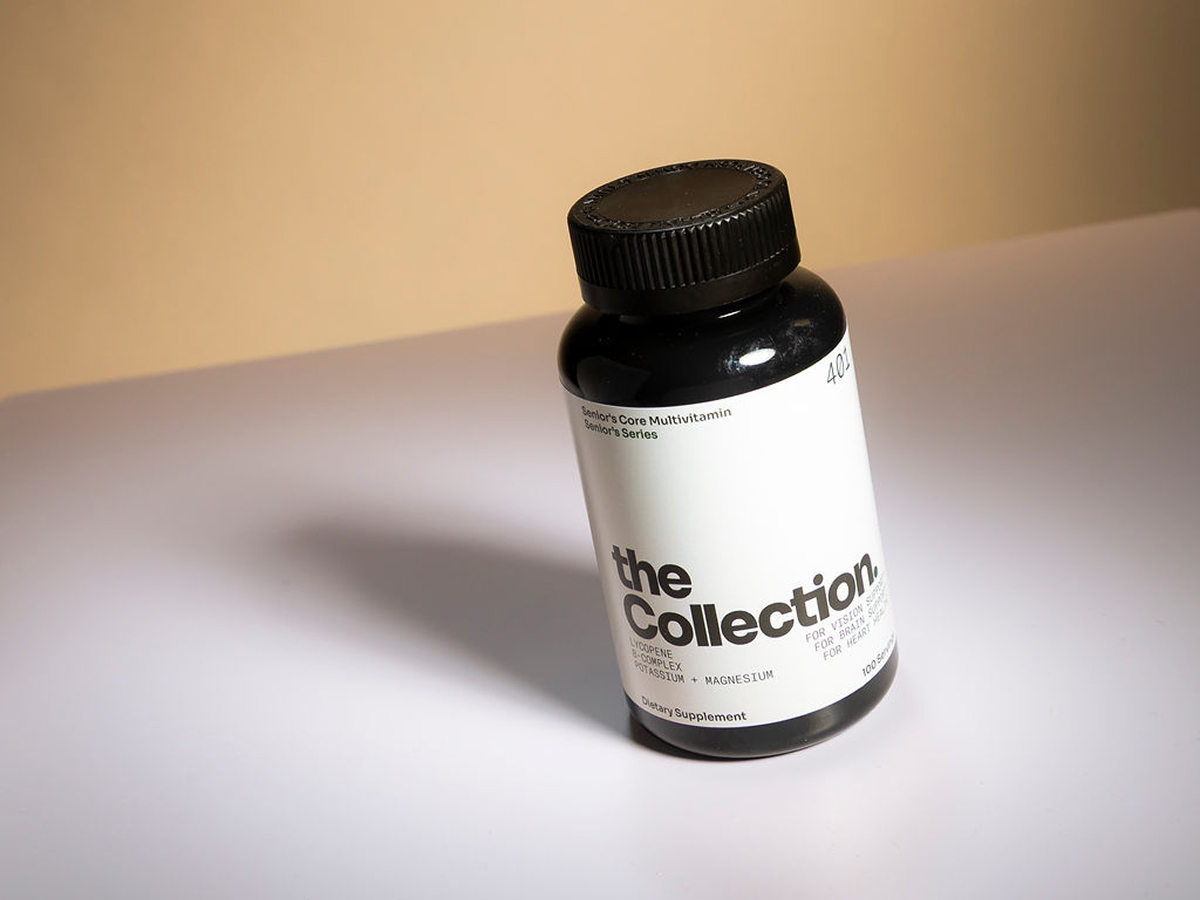
The consequences are significant. B12 deficiency causes neurological symptoms including memory problems, tingling in the extremities, balance issues, and mood changes. These symptoms are frequently attributed to the normal process of aging when the actual cause is a correctable nutritional deficiency. The appropriate solution is B12 in methylcobalamin form, which the body uses directly without a conversion step that becomes less efficient with age. The Senior’s Core Multivitamin from The Collection uses methylcobalamin specifically for this reason. [7, 9]
Calcium, Vitamin D, and Bone Density: The Connection Most People Miss
Most people understand that calcium supports bone health. Fewer know that calcium without vitamin D3 is largely ineffective, since vitamin D is what enables intestinal calcium absorption in the first place. [10] Fewer still are aware that D3 without vitamin K2 introduces a secondary problem: calcium may deposit in arterial walls rather than bone tissue. Data from the Rotterdam Study consisting of nearly 5,000 adults showed that higher K2 intake was associated with roughly half the rate of severe aortic calcification, while K1 intake showed no such relationship. [46]
The interaction among calcium, vitamin D3, and K2 is what separates a well-designed senior’s formula from a generic one. The Collection’s Senior’s Core Multivitamin accounts for all three.
The Supplements That Matter Most for Adults Over 65
Joint and Inflammation Support: Why CurQLife® Joint Support Is Different from Standard Turmeric
Joint discomfort is one of the most common quality-of-life challenges after 65. CurQLife® Joint Support is a natural supplement that has been clinically studied for its effect on COX-2 and LOX-5, which are enzymes responsible for inflammation, pain, and swelling . [5]
This comparison is not theoretical. In a multicenter randomized trial published in Clinical Interventions in Aging, patients with knee pain who took a curcuma extract experienced noticeable improvements in pain and function. [23]
In a validated preclinical model, CurQLife® produced a 94% reduction in inflammation markers with measurable effects within 7 days of daily dosing. [6] It is 100% drug-free and appropriate for long-term daily use. CurQLife® also delivers 48x greater bioavailability than standard turmeric and curcumin products, meaning the active ingredients are actually absorbed rather than passing through the body unused. [5, 6, 7, 13]
Cognitive Support: Omega-3s, B Vitamins, and BacoZest™
- Omega-3 DHA: the primary structural fat in the brain. A minimum of 500mg of DHA daily is the threshold at which most research shows meaningful brain health benefits.
- B vitamins (B6, B12, folate): elevated homocysteine, which occurs when B vitamin status is low, is directly linked to accelerated brain aging and increased cognitive decline risk. In a randomized controlled trial published in PLoS One, B vitamin supplementation slowed the rate of brain atrophy in older adults with mild cognitive impairment. [48]
- BacoZest™: addresses the mechanisms most relevant to age-related cognitive slowing, including myelin integrity, acetylcholine availability, and brain inflammation. [1, 19]
NAD+ and Cellular Energy: The Emerging Science of Aging Well
NAD+ levels decline with age. Research published in PLoS One measuring NAD+ in human tissue across the lifespan documented a substantial age-related decline. [49] NAD Cellular Repair from The Collection combines NAD+ precursors with CoQ10 and CurQLife® for cellular protection, offering three complementary approaches to the same underlying challenge of age-related energy decline. [7, 9]
Supplements to Be Careful About: Interactions with Common Medications
- Blood thinners (warfarin, Eliquis, Xarelto): vitamin K, high-dose fish oil, and curcumin can all interact with anticoagulants. Every supplement addition should be discussed with a physician before starting.
- Statins: CoQ10 is depleted by statin medications. Whether supplementing CoQ10 resolves statin-associated muscle symptoms is still debated in the research, which makes this a conversation worth having with your doctor rather than a decision to make on your own.
- Blood pressure medications: high-dose potassium and magnesium can affect blood pressure readings and medication efficacy. Your physician should be aware of any additions.
- Thyroid medications: calcium and iron can interfere with thyroid medication absorption. Thyroid medication should typically be taken at least 4 hours apart from calcium or iron supplements.
- Metformin: depletes B12 over time. A long-term analysis from the Diabetes Prevention Program Outcomes Study, published in the Journal of Clinical Endocrinology and Metabolism, confirmed that extended metformin use is associated with B12 deficiency. [24] Anyone taking metformin who has not discussed B12 supplementation with their doctor should raise it at the next appointment.
The general principle for anyone over 65 taking prescription medication is straightforward: inform your physician of any supplement additions before making them.
How Much Is Too Much? Safe Dosing Principles for Older Adults
- Vitamin A: look for formulas that use beta-carotene, which the body converts as needed, rather than high-dose preformed vitamin A (retinol). Because fat-soluble vitamins are stored in the liver rather than excreted, sustained high intakes accumulate. [10]
- Iron: unless a deficiency has been confirmed by blood test, most adults over 65 should not take supplemental iron.
- Calcium: standard supplemental doses of 500 to 1,000mg alongside dietary calcium are appropriate. A meta-analysis published in the BMJ found that high-dose calcium supplementation without vitamin D was associated with increased cardiovascular risk. [25]
- Vitamin D: the Institute of Medicine sets the tolerable upper intake level for adults at 4,000 IU daily. Doses above that without physician monitoring are not recommended for extended periods. [47]
How The Collection Senior’s Series Is Specifically Designed for This Stage of Life
The Senior’s Series is built around nutrient forms that account for the absorption changes that accompany aging: methylcobalamin for B12, chelated minerals, and a vitamin D3 and K2 combination. [7, 9, 45, 46] CurQLife® Joint Support provides clinical-grade anti-inflammatory support with 48x greater bioavailability than standard curcumin, a profile that is 100% drug-free, and human trial evidence supporting well-absorbed curcumin for joint pain and function. [5, 6, 7, 23] NAD Cellular Repair addresses the upstream energy decline that affects physical energy, cognitive function, and recovery capacity at the cellular level. [49]
Together, the Senior’s Core Multivitamin, CurQLife® Joint Support, and NAD Cellular Repair cover the three most important supplementation priorities for adults over 65, with a clear and evidence-based rationale behind each one.
Disclaimer: These statements have not been evaluated by the Food and Drug Administration. This product is not intended to diagnose, treat, cure or prevent any disease.
Sources
- [1] Laila Nutraceuticals: BacoZest™ Adult Memory Study (12-week RCT, n=76)
- [5] Laila Nutraceuticals: CurQLife® In Vitro Cell Studies
- [6] Laila Nutraceuticals: CurQLife® In Vivo Arthritis Study (FCA model)
- [7] The Collection Science Education Platform, thecollectionbrand.com
- [9] The Collection Product Label Information, Earth’s Creation USA
- [10] Andrès E, et al. Fat-Soluble Vitamins A, D, E, and K. Journal of Clinical Medicine, 2024
- [13] Anand P, et al. Bioavailability of curcumin. Molecular Pharmaceutics, 2007
- [19] Kongkeaw C, et al. Meta-analysis of RCTs on cognitive effects of Bacopa monnieri extract. Journal of Ethnopharmacology, 2014
- [23] Kuptniratsaikul V, et al. Efficacy and safety of Curcuma domestica extracts compared with ibuprofen in patients with knee osteoarthritis. Clinical Interventions in Aging, 2014
- [24] Aroda VR, Edelstein SL, Goldberg RB, et al. Long-term metformin use and vitamin B12 deficiency in the Diabetes Prevention Program Outcomes Study. Journal of Clinical Endocrinology and Metabolism, 2016
- [25] Bolland MJ, Avenell A, Baron JA, et al. Effect of calcium supplements on risk of myocardial infarction and cardiovascular events: meta-analysis. BMJ, 2010
- [45] Baik HW, Russell RM. Vitamin B12 deficiency in the elderly. Annual Review of Nutrition, 1999
- [46] Geleijnse JM, Vermeer C, Grobbee DE, et al. Dietary intake of menaquinone is associated with a reduced risk of coronary heart disease: the Rotterdam Study. Journal of Nutrition, 2004
- [47] Institute of Medicine. Dietary Reference Intakes for Calcium and Vitamin D. Washington, DC: National Academies Press, 2011
- [48] Smith AD, Smith SM, de Jager CA, et al. Homocysteine-lowering by B vitamins slows the rate of accelerated brain atrophy in mild cognitive impairment: a randomized controlled trial. PLoS One, 2010
- [49] Massudi H, Grant R, Braidy N, et al. Age-associated changes in oxidative stress and NAD+ metabolism in human tissue. PLoS One, 2012